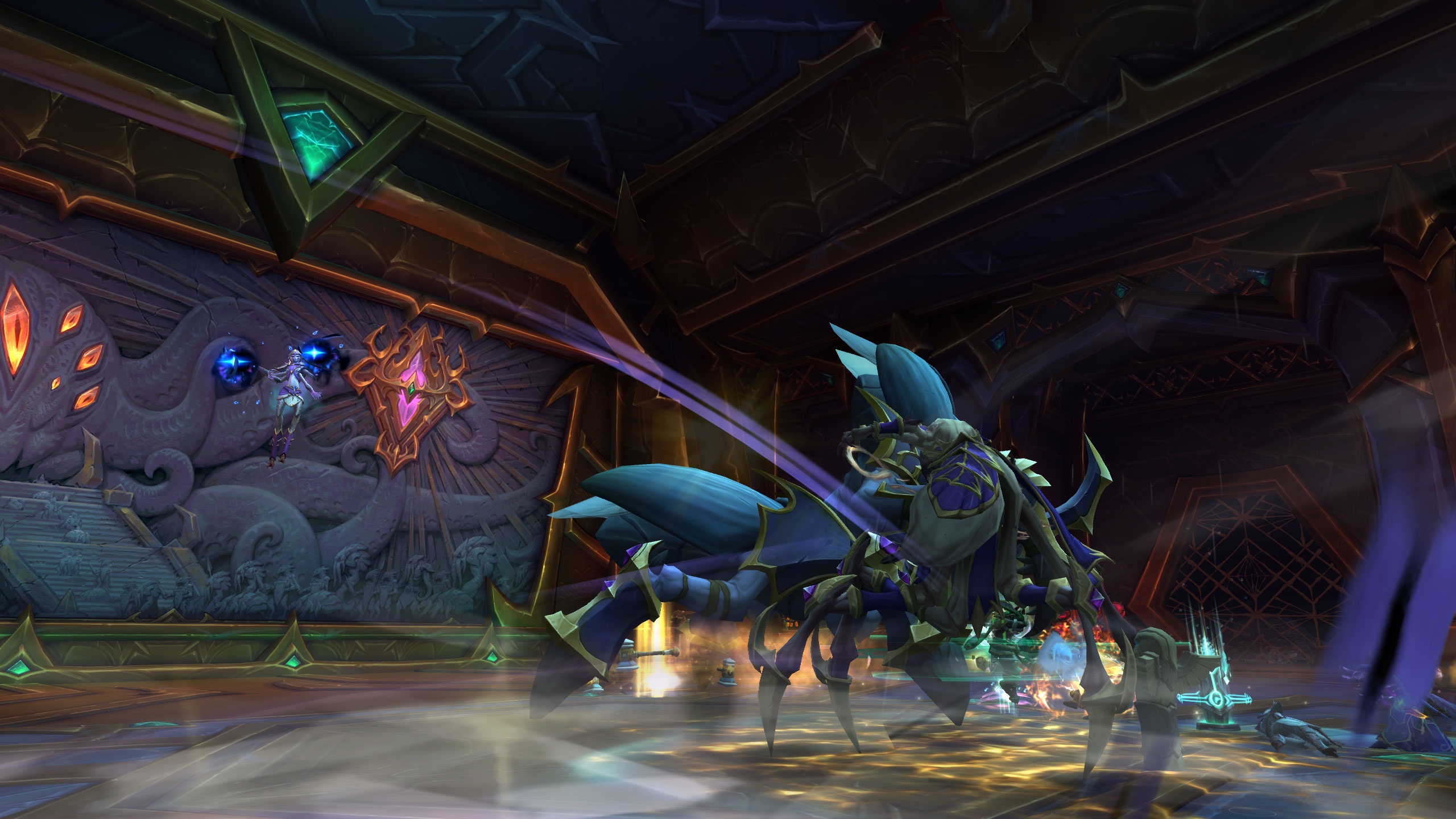
Class balance in *World of Warcraft* has been a topic of heated discussion for nearly two decades. The game has gone through many iterations, with classes evolving to meet the demands of both PvP and PvE gameplay. However, as *WoW* has expanded, so too has the complexity of its class system. In this article, we’ll explore the rise and fall of class balance in *WoW*, examining how it has shaped the game and its community.
The Early Days: Simpler, but More Balanced
In the early days of *World of Warcraft*, class balance was much simpler. With fewer classes and less complex mechanics, it was easier to ensure that no class was overpowered. The game’s design focused on ensuring each class had its niche, such as Warriors as tanks, Rogues as damage dealers, and Priests as healers. While there were certainly minor imbalances—such as the power of Warlocks in PvP or the ability of Paladins to heal in raids—overall, the balance felt fair across the board. The simplicity of the game in its early years allowed for more straightforward class design.
Expanding the Class Pool: Growing Pains
As *WoW* expanded with new expansions, more classes were introduced, and each expansion brought with it a slew of new abilities, talents, and mechanics. With each new class—such as the Death Knight in *Wrath of the Lich King* or the Monk in *Mists of Pandaria*—came a new set of challenges for balancing. The introduction of dual specs, more talent trees, and additional specialization options meant that classes became increasingly complex. It wasn’t just about ensuring that classes were balanced in their core roles; it became necessary to balance them across multiple talent trees and gameplay modes, complicating the process.
The Height of Class Imbalance: The Trouble with Tuning
One of the most noticeable times of class imbalance came during the *Mists of Pandaria* and *Warlords of Draenor* expansions, where certain classes and specializations became overwhelmingly dominant in both PvP and PvE. For example, classes like Mages and Rogues dominated in PvP, while certain DPS specs like Fury Warriors and Elemental Shamans were frequently overpowered in raids. The imbalance often came down to small but powerful mechanics, such as burst damage abilities or healing throughput, which could overshadow other classes that were more reliant on sustained performance. Players began to feel that their choice of class was dictated by what was “best” in a given patch rather than personal preference, which led to frustration and class homogenization.
The Effort to Fix Balance: Reworks and Adjustments
In response to player complaints, Blizzard started to implement a variety of changes to improve class balance. Talents were reworked, and specs were often tweaked or redesigned to bring them in line with others. The aim was to create a more fluid experience where no class dominated the game in a particular mode. For example, the *Legion* expansion introduced the concept of Artifact weapons and class-specific questlines, which provided a more tailored experience for each class while working towards balance. Additionally, with the introduction of the *Battle for Azeroth* and *Shadowlands* expansions, Blizzard attempted to further refine the balance by reducing power creep, introducing scaling systems for certain abilities, and ensuring that no single class could outshine others in every scenario.
The Ongoing Struggle for Balance
Despite Blizzard’s best efforts, *WoW*’s class balance continues to be an ongoing struggle. New expansions, changes to the game’s combat system, and player feedback mean that balancing is never truly “final.” In fact, it’s an ever-evolving process. Each patch and each expansion brings with it new challenges and, often, new imbalances. For example, in *Shadowlands*, certain classes found themselves struggling to perform in high-end content, while others dominated. In *Dragonflight*, Blizzard has once again focused on making classes feel distinct but balanced, though this remains an ongoing process as the game evolves.
Conclusion
The rise and fall of class balance in *World of Warcraft* is a testament to the game’s complexity and its ability to evolve over time. While balance will always be a challenge in a game as large and diverse as *WoW*, the developers’ efforts to continually adjust and fine-tune classes are a sign of their commitment to keeping the game fair and fun. For players, class balance will always be a crucial factor in their experience, but as *WoW* continues to evolve, it remains a game where even the most imbalanced classes eventually find their place.
Home





Leave a Reply